

Myofascial Release
Sustained, targeted pressure that releases the deep tension stretching can’t reach.
WHAT IT IS
The tension under the tension.
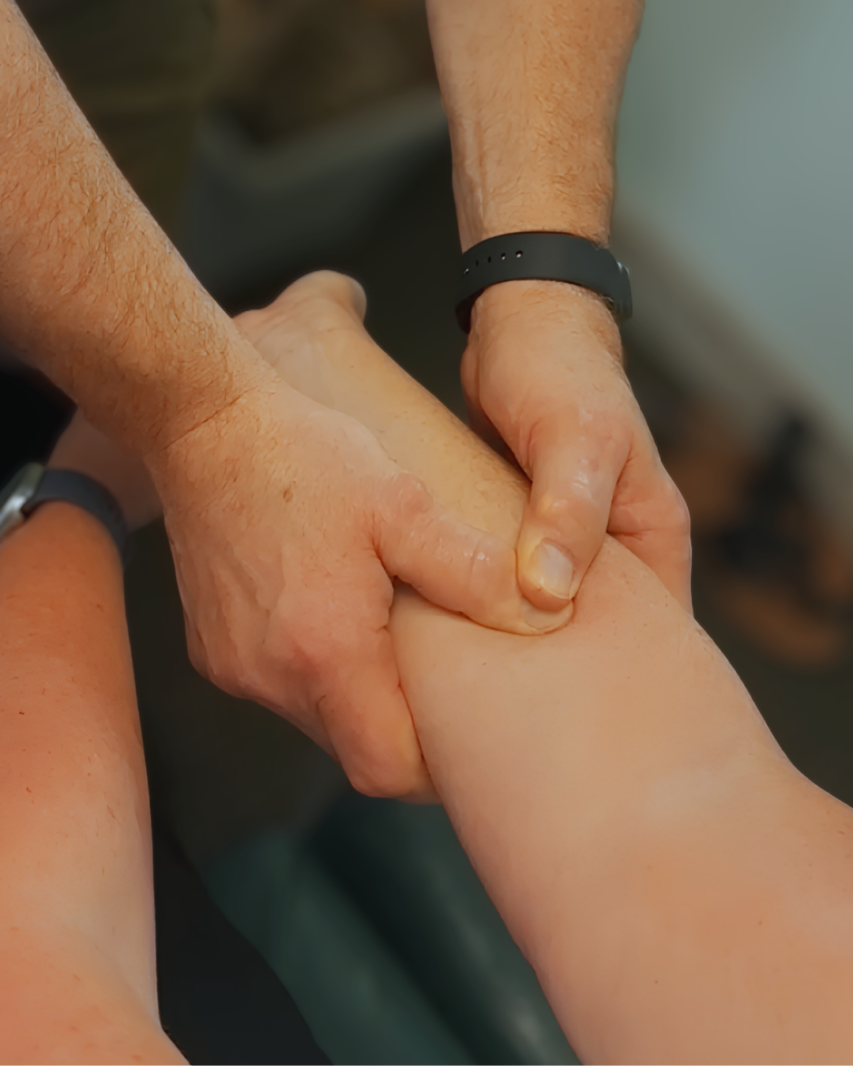
Fascia is the connective tissue wrapping every muscle, and it thickens where it’s been under load or guarding an injury. Sustained hand pressure — held for a minute or more, not rubbed — lets those restrictions give way. This is the deep, specific tension that stretching doesn’t reach, because stretching pulls on the whole line instead of the knot in it.
WHO IT’S FOR
For the spot that won’t let go.
Myofascial release tends to help when:
If a tight, restricted spot is limiting how you move, this is built for it.
Sound like your spot?

HOW MYOFASCIAL RELEASE WORKS
Slow pressure. Targeted release.
We find the specific restriction and hold steady, targeted pressure on it, often for a minute or more, until the tissue gives way. It’s slower and more precise than a massage, and that’s the point.
What that looks like:
Muscle can undo what the adjustment just did.
Chiropractic adjustments restore joint movement, but tight muscle and fascia can keep limiting motion or pull the body back into the pattern that caused the problem. Releasing those tissues makes the adjustment more effective and helps it hold.
Your exam determines where to place the focus—and how each approach fits into your care.
Three steps. One clear path.
We identify what’s driving your pain, build a plan around what you need, and stay with you through every step of getting better.
01
The evaluation
A comprehensive consultation to understand your symptoms, history, and goals, followed by a hands-on exam, functional testing, and imaging when it helps — so the plan comes from findings, not guesswork.
02
Your care plan
A plan built around your body and your goals, with an honest breakdown of what to expect — how care will go, and roughly how long it should take. No confusion, no guessing.
03
Relieve, restore, rebuild
Precise adjustments, targeted soft-tissue work, and progressive rehab that ease the pain and rebuild what let it happen — until you’re back to what you came in for, and it holds.
Frequently Asked Questions
What is myofascial release?
Myofascial release is a gentle, hands-on therapy that targets tight muscles and connective tissue (fascia) to reduce tension, improve mobility, and restore healthy movement.
How is myofascial release different from massage therapy?
While both treatments use hands-on techniques, myofascial release focuses specifically on releasing restrictions in the fascia and improving tissue mobility. Massage therapy often focuses more broadly on relieving muscle tension, improving circulation, and promoting relaxation.
Is myofascial release painful?
Treatment is generally gentle and well tolerated. Some areas of tight tissue may feel tender during treatment, but your provider will work within your comfort level throughout the session.
How many treatments will I need?
The number of sessions depends on your condition, symptoms, and goals. Some patients notice improvement after one visit, while others benefit from ongoing treatment as part of a comprehensive care plan.
Can myofascial release be combined with chiropractic care?
Yes. Myofascial release is often performed alongside chiropractic adjustments to help muscles relax, improve tissue mobility, and support longer-lasting results.
Why choose Summit for myofascial release?
Our approach goes beyond relieving tight muscles. At Summit Family & Sports Chiropractic, myofascial release is integrated with chiropractic care and rehabilitation to address the underlying causes of pain and restricted movement. By treating both the soft tissues and the way your body moves, we help you achieve longer-lasting relief and better overall function.
What happens at my first appointment?
Your visit begins with a discussion about your symptoms, activity level, and goals. Your provider will evaluate your movement and determine whether myofascial release is the right treatment for your condition. Your session is personalized to target areas of restriction and may be combined with chiropractic care or rehabilitation when appropriate.
How do I get started?
Getting started is easy. Just give one of our clinics a call. We’ll help you determine whether myofascial release is right for you and create a personalized plan to help you move more comfortably and recover more effectively.
Do I need a referral?
A referral is not typically required for self-pay visits. If you plan to use insurance, check with your provider to see whether a referral is required and whether treatment is covered.
RELIEVE. RESTORE. REBUILD.
Let’s free up what’s stuck.
Start with a comprehensive exam. One visit, and you’ll know what that spot is and what it takes to release it.
New Patients — Walk-Ins Usually Seen Same Day